PlayGeet's Music Copyright & Release Protection workflow
PlayGeet’s multi-layer approval system combines copyright detection, AI music analysis, and manual review to protect artists, royalties, and long-term DSP compliance. In 2025 alone, 30–40% of risky releases were stopped before distribution.
Music distribution in 2025 is harder than ever. As DSP review standards become stricter, understanding how the release approval process works helps artists prepare better submissions and avoid unnecessary delays.
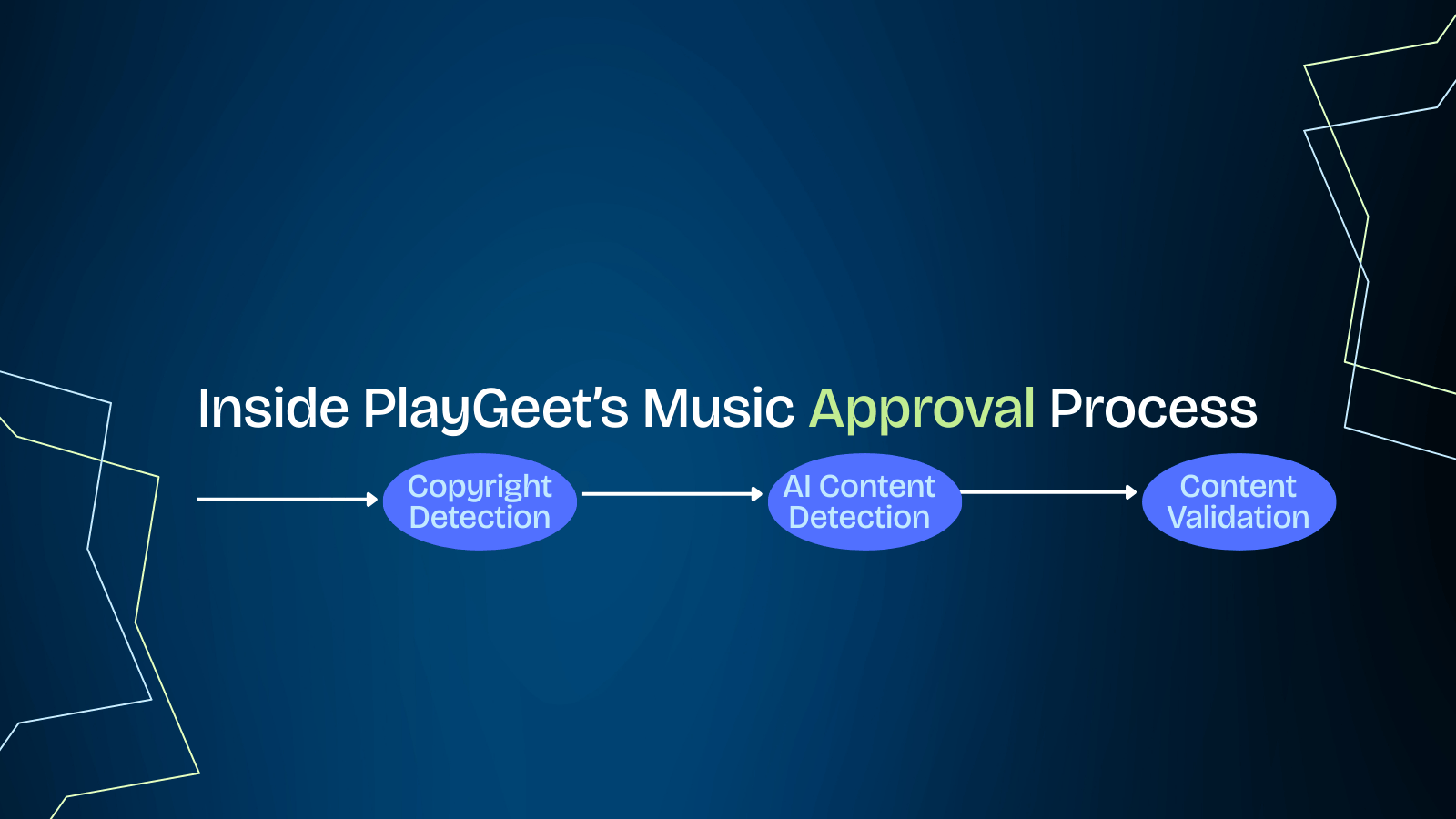
At PlayGeet, every release goes through this multi-layer approval process. This release approval process protects independent artists, labels, royalties, and long-term platform trust on the music distribution platform.
In 2025, about 30--40% of submitted releases were rejected before they reached streaming platforms. That is intentional. It helps stop problems early.
Why PlayGeet Rejects 30--40% of Releases
Most rejected submissions fit one or more of these groups:
Copyright infringement or reused audio
AI generated or partly AI generated music
Wrong metadata or false ownership claims
Artwork approval failures
Content likely to trigger DSP takedowns
Blocking risky releases early helps prevent:
Revenue loss
Catalog-wide penalties
Artist and distributor account bans
1. Copyright Detection and Ownership Check
This music copyright check is part of the release approval process.
Every submission is checked for:
Unauthorized copyrighted material
Reused instrumentals or beats
Previously released audio under different ownership
High-risk third-party samples
Content ID detection matches or other reuse signals
A large share of 2025 rejections failed at this stage.
Only original content with clear ownership moves forward.
2. AI Generated Content Detection
As AI music tools spread, DSPs have tightened their music distribution guidelines for synthetic content. Artists using AI-assisted music should understand PlayGeet's AI-generated music distribution policy before submitting a release.
PlayGeet uses AI music detection to spot synthetic content. It looks for:
AI vocal patterns
Generative music structures
Synthetic audio fingerprints
Many releases are rejected because:
AI use is not disclosed
DSPs do not allow revenue from these tracks
Ownership rights are unclear
This protects human creators and supports DSP compliance.
3. Manual Review and Human Validation
Automation helps, but it is not enough.
Any flagged release goes to manual human review, where PlayGeet's team checks:
Audio is real
Metadata verification
Artwork approval
Artist and label ownership claims
This supports fair decisions, context-based judgment, and clear outcomes.
This additional review step is one reason why approval times can vary between different releases.
What Happens If a Release Is Rejected?
PlayGeet does not use silent takedowns.
When a release is rejected:
Artists get a clear reason
No hidden penalties are applied
Fixable issues can be corrected
Future submissions are not affected if the issue is resolved
Why This System Benefits Artists
Although strict, this release review process helps artists by delivering:
Stable royalties
Fewer DSP takedowns
Long-term catalog safety
Strong distributor--DSP trust
Artists who pass PlayGeet's review usually see better music release approval results and fewer payout issues.
Built for the Future of Music Distribution
By combining:
Copyright detection
AI music analysis
Manual human review
PlayGeet offers one of the strongest music distribution approval systems in modern music distribution.
Uploading music is easy. Releasing music safely is not.
PlayGeet rejects risky content today so artists do not lose their careers tomorrow.
Release with confidence. Release with PlayGeet.
Q&A
Question: Why does PlayGeet reject such a high percentage of submitted releases?
Short answer: PlayGeet rejects about 30--40% of submitted releases because many contain copyright risks, reused audio, undisclosed AI generated elements, wrong metadata, artwork issues, or content that may trigger DSP takedowns. The goal is to stop problems before distribution.
Question: Does a rejected release permanently harm an artist's future submissions?
Short answer: No. Rejections do not affect future submissions if the problems are fixed. PlayGeet gives a clear reason, avoids hidden penalties, and allows corrected releases to be sent again.
Question: What makes PlayGeet's approval process multi-layer?
Short answer: It has three main layers: copyright detection and ownership check, AI generated content detection, and manual review. Together, they help catch unauthorized material, unclear ownership, synthetic audio risks, metadata issues, artwork violations, and other problems before a release reaches DSPs.
Question: Why is AI generated music treated as a risk?
Short answer: AI generated or partly AI generated music can be a risk when AI use is hidden, ownership rights are unclear, or DSP payout rules do not allow it. PlayGeet checks AI vocal patterns, generative music structures, and synthetic audio fingerprints to support compliance and protect human creators.
Question: How does this system benefit artists who pass review?
Short answer: Artists who pass review can get higher delivery success, fewer payout issues, more stable royalties, fewer DSP takedowns, stronger catalog safety, and better trust between the distributor and DSP platforms.