Music Copyright Explained - Rights, Royalties & Music Distribution
Learn what music copyright is, what it protects, and how it impacts music distribution, royalties, publishing, and ownership. This guide helps independent artists protect their music and release it with confidence.
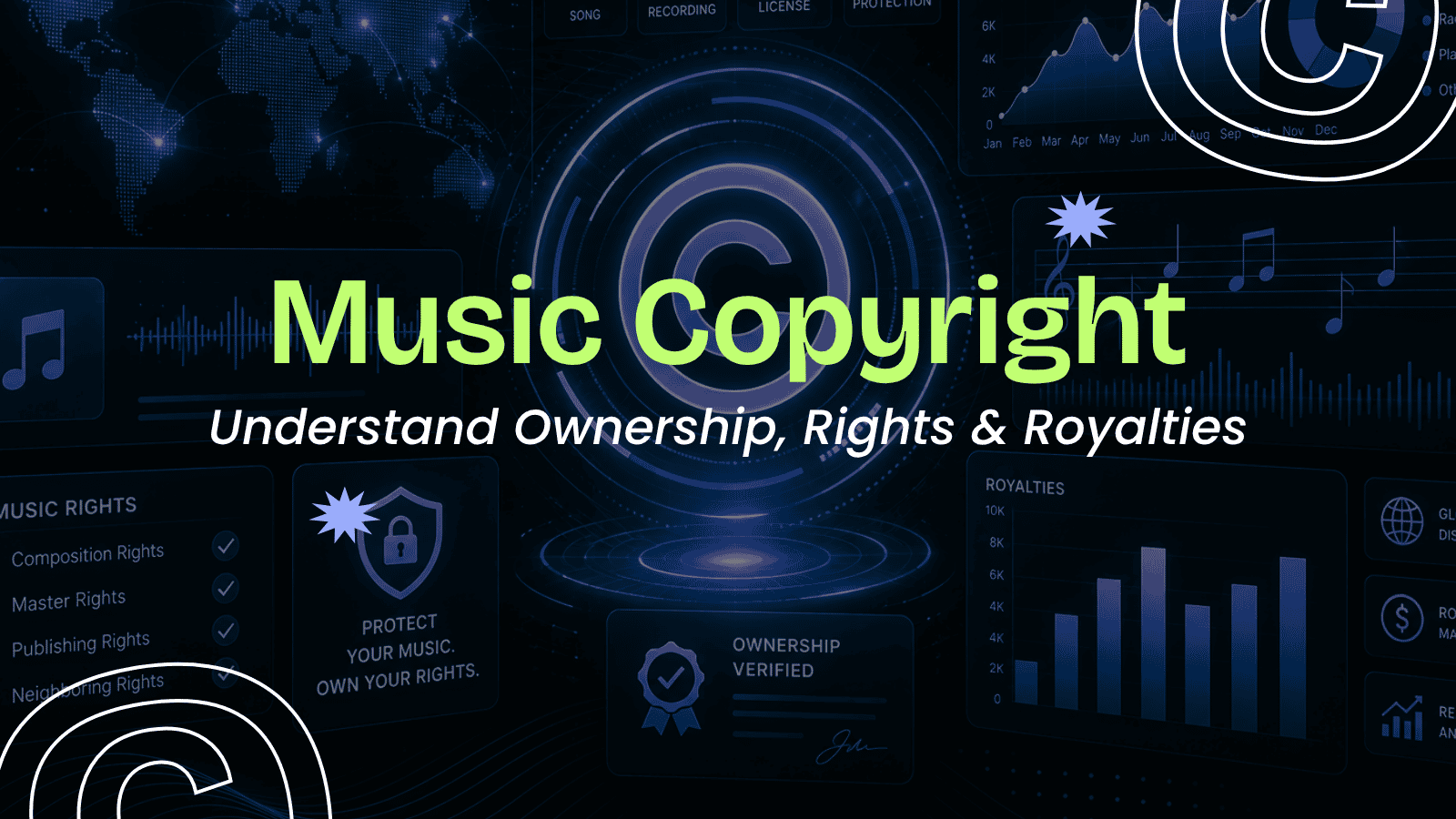
Music copyright is the legal framework that protects original musical works by giving creators ownership and control over how their music is used, distributed, and monetized. Whether you're releasing your first single or building a professional catalog, understanding copyright is essential for protecting your creative work and earning the royalties it generates.
For independent artists, copyright is closely connected to digital music distribution, streaming platforms, publishing, and licensing. Without clear ownership, you may face delayed releases, royalty disputes, or difficulties licensing your music for commercial opportunities.
In this guide, you'll learn:
What music copyright is and how it works
What copyright protects
The difference between composition and master rights
How copyright affects music distribution and royalties
Best practices for protecting your music before release
Understanding these fundamentals will help you make informed decisions throughout your music career and ensure your work remains protected from creation to commercial release.
What Is Music Copyright?
Music copyright is a form of intellectual property that gives creators exclusive legal rights over their original musical works. These rights allow copyright owners to control how their music is reproduced, distributed, performed, adapted, and licensed.
In many countries, copyright protection begins automatically once an original musical work is created and fixed in a tangible form, such as an audio recording, written notation, or digital file. While registration requirements vary by country, registering your copyright may provide additional legal benefits if your rights are ever challenged.
For independent artists, copyright transforms music from a creative idea into a valuable business asset. It protects your ownership while allowing you to earn income through streaming, licensing, publishing, and other royalty sources.
How Copyright Protection Works
Create an original work
Write an original melody, lyrics, or musical composition.
Fix the work in a tangible form
Record your song, save your project files, or write the music down.
Keep evidence of ownership
Store project files, drafts, session files, and timestamps securely.
Register your copyright (where applicable)
Registration procedures differ by country, but formal registration can strengthen your legal rights.
Maintain your documentation
Keep agreements, split sheets, licensing contracts, and registration records organized for future reference.
Although copyright generally exists automatically once your work is created, maintaining proper documentation and registration records makes it much easier to resolve disputes, license your music, and protect your rights over time.
Why Music Copyright Matters
Music copyright is much more than a legal requirement, it is the foundation of ownership, royalty collection, and long-term career growth. Every stream, download, broadcast, or commercial use of your music depends on clearly established rights.
Without copyright protection, proving ownership becomes significantly more difficult, which can affect your ability to collect royalties, distribute music, or license your work for commercial opportunities.
Copyright Helps Independent Artists:
Protect Ownership
Copyright establishes legal ownership of your original music, ensuring you control how your songs are used, reproduced, and shared.
Collect Royalties
Streaming services, broadcasters, and licensing partners rely on copyright information to identify rights holders and distribute royalty payments accurately.
License Your Music
Whether your music appears in a film, television show, advertisement, or video game, licensing opportunities require verifiable ownership before agreements can be finalized.
Prevent Unauthorized Use
Copyright provides legal protection if someone copies, distributes, samples, or uses your music without permission.
Support Music Distribution
Before releasing music through a digital music distributor, artists should ensure ownership details, contributor information, and metadata are accurate. Clear rights information helps reduce delays and supports accurate royalty reporting across streaming platforms.
For independent artists, copyright is not simply about protecting songs—it is about protecting your entire music business. Once you understand why copyright matters, the next step is learning exactly what it protects and how different creative elements are treated under copyright law.
What Does Music Copyright Protect?
Understanding what music copyright protects is essential for safeguarding your creative work and avoiding ownership disputes. Copyright doesn't just protect a finished song it can cover multiple creative elements, each with its own legal significance. Knowing what is protected helps independent artists manage their rights, distribute music confidently, and collect royalties accurately.
Lyrics
The written words of a song are protected as soon as they are recorded in a tangible form, such as a notebook, text document, or digital file. Original lyrics cannot be copied, reproduced, or commercially used without the copyright owner's permission.
Melody
A melody is one of the most recognizable parts of a song and is protected independently of the lyrics. If someone reproduces a substantially similar melody without authorization, it may lead to a copyright dispute.
Musical Composition
The musical composition combines the melody, harmony, rhythm, and lyrics into a complete creative work. Songwriters typically own the composition rights unless ownership has been transferred through an agreement. These rights are the foundation of music publishing and several royalty streams.
Sound Recording
The sound recording, also known as the master recording, protects the specific recorded performance of a song. Even if multiple artists record the same composition, each recording has its own separate copyright. Master rights are usually owned by the recording artist, producer, or record label, depending on contractual agreements.
Album Artwork
Original cover artwork, illustrations, and photography used for a music release are also protected by copyright. Artists should ensure they have permission or ownership of any artwork before distributing their music.
Music Videos
Music videos are separate audiovisual works protected by copyright. They may involve multiple contributors, including directors, editors, cinematographers, and performers, making written agreements especially important before release.
By understanding these different categories, artists can better identify what they own and what permissions may be required when collaborating with others.
Music Copyright and Music Distribution
Copyright and music distribution work together, but they serve different purposes. Copyright establishes legal ownership of your music, while music distribution delivers your songs to streaming platforms such as Spotify, Apple Music, YouTube Music, Amazon Music, Deezer, and many others.
Many independent artists mistakenly believe that uploading music through a distributor automatically protects their copyright. In reality, copyright ownership and music distribution are separate processes. Understanding the distinction helps you protect your rights while ensuring your music reaches listeners worldwide. If you're new to digital distribution, read our What Is Music Distribution? Complete Guide for Independent Artists to learn how the distribution process works alongside copyright protection.
Verify Ownership Before Distribution
Before releasing your music, confirm that you own or have permission to use all elements of the recording. This includes lyrics, melodies, samples, featured artists, and producer contributions. Unresolved ownership issues can delay releases or lead to copyright claims after publication.
Prepare Accurate Music Metadata
Metadata plays a critical role in music distribution. Details such as the song title, artist name, songwriter credits, ISRC, release date, and copyright information help streaming platforms identify your music and distribute royalties correctly.
Incomplete or inaccurate metadata can result in delayed payments, duplicate artist profiles, or incorrect royalty allocation. Learn more in our Music Metadata Explained guide.
Understand Copyright Claims
Most major streaming and social media platforms use automated systems to detect copyrighted content. If another party claims ownership of your music, you may need to provide evidence that you own the rights. Maintaining organized documentation makes resolving these disputes much easier.
Distribution Does Not Transfer Ownership
Choosing a music distributor does not mean giving up your copyright. In most cases, you continue to own your music while granting the distributor permission to deliver your releases to streaming platforms.
Always review distribution agreements carefully to understand what rights you are granting and whether ownership remains with you.
Monitor Your Releases
After your music goes live, regularly check your artist dashboards and royalty reports. Monitoring your releases helps identify missing royalties, incorrect metadata, duplicate releases, or copyright claims before they become larger problems.
When copyright, metadata, and distribution work together, independent artists can release music confidently while protecting their creative rights and maximizing revenue opportunities.
Music Copyright vs Music Publishing
Although these terms are often used interchangeably, music copyright and music publishing refer to different aspects of the music business.
Copyright establishes ownership of a musical work, while publishing focuses on managing those rights and collecting royalties generated by the composition.
Understanding the difference helps artists make informed decisions about licensing, royalty collection, and long-term career growth.
Feature | Music Copyright | Music Publishing |
Purpose | Protects ownership | Administers composition rights |
Controls | Legal rights | Licensing and royalty collection |
Primary Focus | Ownership | Rights management |
Revenue | Supports all royalty types | Focuses on composition income |
Music Copyright
Copyright gives creators exclusive rights over their original work. It allows artists to control how their music is reproduced, distributed, performed, licensed, and adapted.
Music Publishing
Music publishing manages the business side of songwriting. Publishers or publishing administrators register compositions, issue licenses, collect royalties, and ensure songwriters receive income from performances, streams, broadcasts, and commercial uses.
Which Is More Important?
Neither replaces the other.
Copyright creates ownership.
Publishing helps monetize that ownership.
Many independent artists choose to self-publish during the early stages of their careers, while others work with publishing administrators as their catalogs expand.
Music Copyright and Royalties
One of the biggest benefits of copyright ownership is the ability to earn royalties whenever your music is used commercially. Every stream, broadcast, public performance, download, or licensed use can generate income depending on how your rights are managed.
Understanding the different royalty types helps independent artists maximize earnings from their music.
Mechanical Royalties
Mechanical royalties are generated whenever a musical composition is reproduced. This includes digital streaming, downloads, CDs, vinyl records, and cover recordings.
Performance Royalties
Performance royalties are earned when your composition is played publicly through streaming services, radio stations, television broadcasts, live venues, or other public performances. These royalties are typically collected by Performing Rights Organizations (PROs).
Master Royalties
Master royalties are generated by the sound recording itself. Independent artists who own their master recordings usually receive these royalties through their music distributor whenever their recordings are streamed or downloaded.
Publishing Royalties
Publishing income is connected to the composition rather than the recording. Songwriters and publishers receive these royalties when compositions are licensed, performed, or reproduced.
Sync Licensing
Sync licensing allows music to be used in films, television shows, advertisements, video games, and other visual media. Because both the composition and the master recording are involved, permission from the relevant rights holders is generally required before a sync license can be granted.
For independent artists, owning both composition and master rights can simplify licensing opportunities while increasing potential revenue.
Whether your music generates income from streaming, licensing, or public performances, strong copyright management ensures your work is properly identified and your royalties reach the correct rights holders.
In the next section, we'll look at the most common copyright mistakes artists make—and how to avoid them before releasing your music.
Common Copyright Mistakes
Even talented artists can lose royalties or face legal disputes because of avoidable copyright mistakes. Taking the time to protect your music before release can save significant time, money, and stress later. Here are some of the most common mistakes independent artists should avoid.
Using Samples Without Permission
Sampling another recording without obtaining the necessary permissions can lead to copyright infringement claims. Even short audio clips may require clearance from both the owner of the master recording and the owner of the musical composition.
Not Having Written Agreements
Collaborating with producers, songwriters, or featured artists without written agreements can create ownership disputes. Always document contributor roles, royalty splits, and copyright ownership before releasing a song.
Incorrect Ownership Credits
Mistakes in songwriter names, producer credits, or copyright information can delay royalty payments and create confusion across streaming platforms. Double check all ownership information before distribution.
Ignoring Music Metadata
Metadata is essential for royalty collection and music discovery. Missing ISRC codes, inaccurate songwriter information, or inconsistent artist names can affect both payments and discoverability.
Assuming Distribution Equals Copyright
Uploading music through a digital music distributor does not register or transfer your copyright. Distribution helps deliver your music to streaming platforms, while copyright establishes legal ownership.
Forgetting to Keep Documentation
Save copies of contracts, split sheets, project files, licensing agreements, and registration records. Organized documentation makes it much easier to resolve disputes and verify ownership if needed.
Avoiding these mistakes helps protect your music, simplify royalty collection, and create a smoother release process.
Best Practices Before Releasing Music
Before distributing your music worldwide, take a few minutes to review this checklist. These simple steps can help reduce release issues and ensure your music is ready for streaming platforms.
✔ Confirm Ownership
Ensure you own—or have permission to use—every creative element in your release, including lyrics, melodies, samples, recordings, and artwork.
✔ Review Your Metadata
Verify your song title, artist name, featured artists, songwriter credits, release date, genre, language, and copyright information before submission.
✔ Assign an ISRC
Every recording should have its own ISRC (International Standard Recording Code). This unique identifier helps track streams and supports accurate royalty reporting.
✔ Finalize Songwriter Splits
Agree on ownership percentages before release and document them in a signed split sheet. Resolving ownership after release is often more complicated.
✔ Secure Artwork Rights
Only use artwork, photography, fonts, or illustrations that you own or have permission to use commercially.
✔ Choose a Reliable Music Distributor
Select a music distribution platform that provides transparent royalty reporting, fast delivery to major streaming services, accurate metadata management, and dependable artist support.
Preparing your release carefully helps reduce delays, improve royalty tracking, and build a stronger foundation for your music career.
Frequently Asked Questions
Do I automatically own the copyright to my song?
In many countries, copyright protection begins automatically once an original musical work is created and fixed in a tangible form. Registration rules and legal benefits vary depending on your country's copyright laws.
Does uploading music to Spotify or Apple Music register my copyright?
No. Uploading your music through a distributor delivers it to streaming platforms, but it does not replace copyright registration or ownership documentation where registration is available.
What's the difference between copyright and music publishing?
Copyright establishes ownership of your music, while music publishing manages composition rights, licensing, and royalty collection for songwriters and composers.
Can two people own the same copyright?
Yes. Songs created by multiple contributors can have shared ownership. Written agreements and split sheets help define each person's ownership percentage.
What is the difference between composition rights and master rights?
Composition rights protect the underlying song, including the melody and lyrics. Master rights protect the specific recorded performance of that song.
Why is metadata important?
Accurate metadata helps streaming platforms identify your music, distribute royalties correctly, improve discoverability, and reduce release errors.
Conclusion
Music copyright is one of the most important foundations of a successful music career. It protects your creative work, establishes ownership, supports royalty collection, and creates opportunities for licensing and commercial use.
Whether you're releasing your first single or managing an established catalog, understanding copyright, metadata, publishing, and music distribution will help you make informed decisions throughout your career. By keeping accurate documentation, organizing ownership information, and following industry best practices, you can reduce legal risks and ensure your music continues generating value over time.
Ready to release your next song? Once your copyright, metadata, and ownership details are in place, choosing the right music distribution platform is the next step. PlayGeet helps independent artists distribute music globally, manage release metadata, track royalties, and stay in control of their music rights all from one platform.